Service
Pile Driving on Bear Lake
Everything above the water depends on what is driven below it. We drive piles for new docks, replace pilings that have failed, and set foundations for shoreline structures. Correct depth and correct spacing are what keep a dock from walking around in a storm, and that is the part we do not rush.
- Lakes, reservoirs, and ponds
- Send photos to get started
- Job video below
What this looks like on Bear Lake
A pile that is not deep enough will hold fine right up until the day it matters. Wind loading, waves, and a boat pulling against a cleat in a chop all put force into the foundation, and that force has to go somewhere. Depth is what puts it into the bottom instead of into movement.
Replacement is as common as new work. Pilings rot at the waterline, lose their footing as sediment shifts, or get knocked out of plumb by storms and boat strikes. Swapping one out without disturbing the dock sitting on it is its own skill.
Spacing matters as much as depth. Too few piles and the frame carries loads it was never meant to, which shows up later as a dock that has racked out of square.
On the job
See the crew at work.
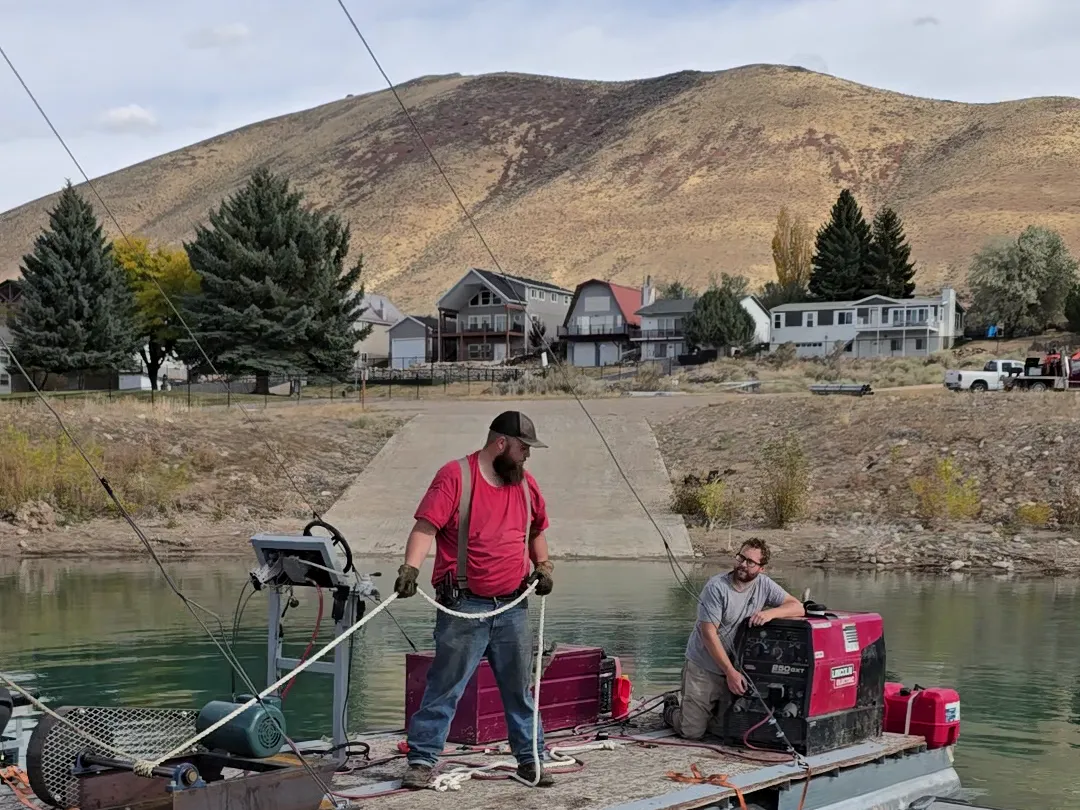
Our crew driving guide piles for a new floating dock marina, filmed from the work barge.
2 clips, tap to play
1Running the rig from the work barge 2Working the winch line on the driver
Common questions
- How deep do dock pilings need to be driven?
- It depends on bottom composition and the loads the dock will carry. There is no single number, which is why we assess the site rather than working to a default.
- Can you replace a piling without rebuilding the dock?
- In most cases yes. Swapping a failed piling while leaving the structure above it in place is routine work for us.
Other services
- Dock Sales and ConstructionNew docks sold and built for Bear Lake, from a simple swim platform to a full multi slip setup.
- Seasonal Dock Installation and RemovalIn the water each spring, out each fall, on a schedule you do not have to think about.
- MooringsEco-Mooring systems for boats, lighter setups for buoys, all sized to hold through Bear Lake weather.
- Dock RepairDecking, frames, hardware, and pilings brought back to solid.
- Boat TowingOn water recovery and over the road hauling anywhere around the lake.
- DredgingSilt and sediment cleared so you have usable depth at your dock again.
Get a quote
Ready to talk about your pile driving project?
Tell us where the job is and what you are dealing with. We will tell you what it actually takes.